
Niagara’s real estate market will never die, even if it looked that way for the last couple of years! That being said, it will hit the trough and stay there for a bit. We continue to see that trough/yo-yo effect. Small increases, followed by small decreases, with nearly net-zero changes being the end result.
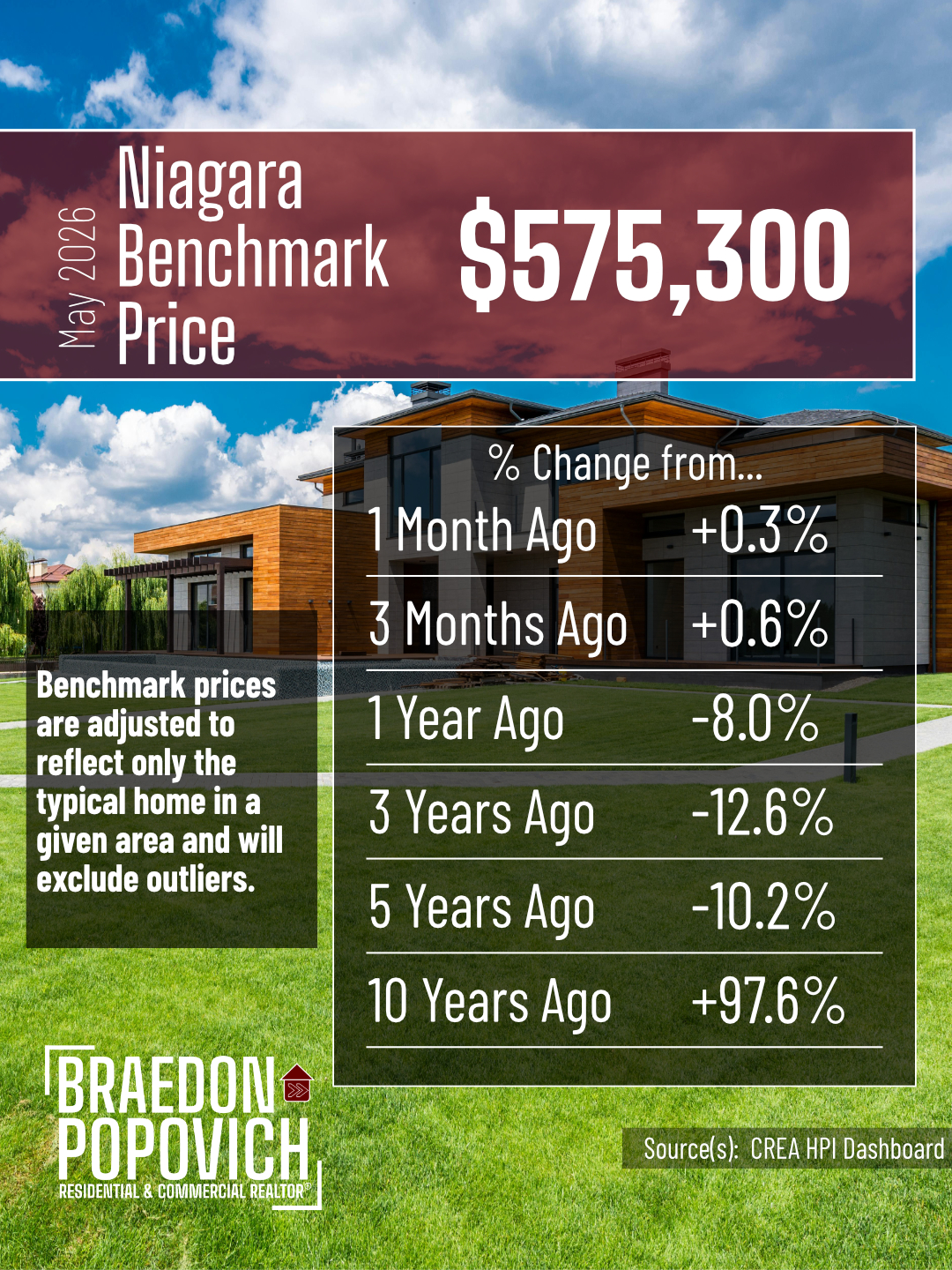
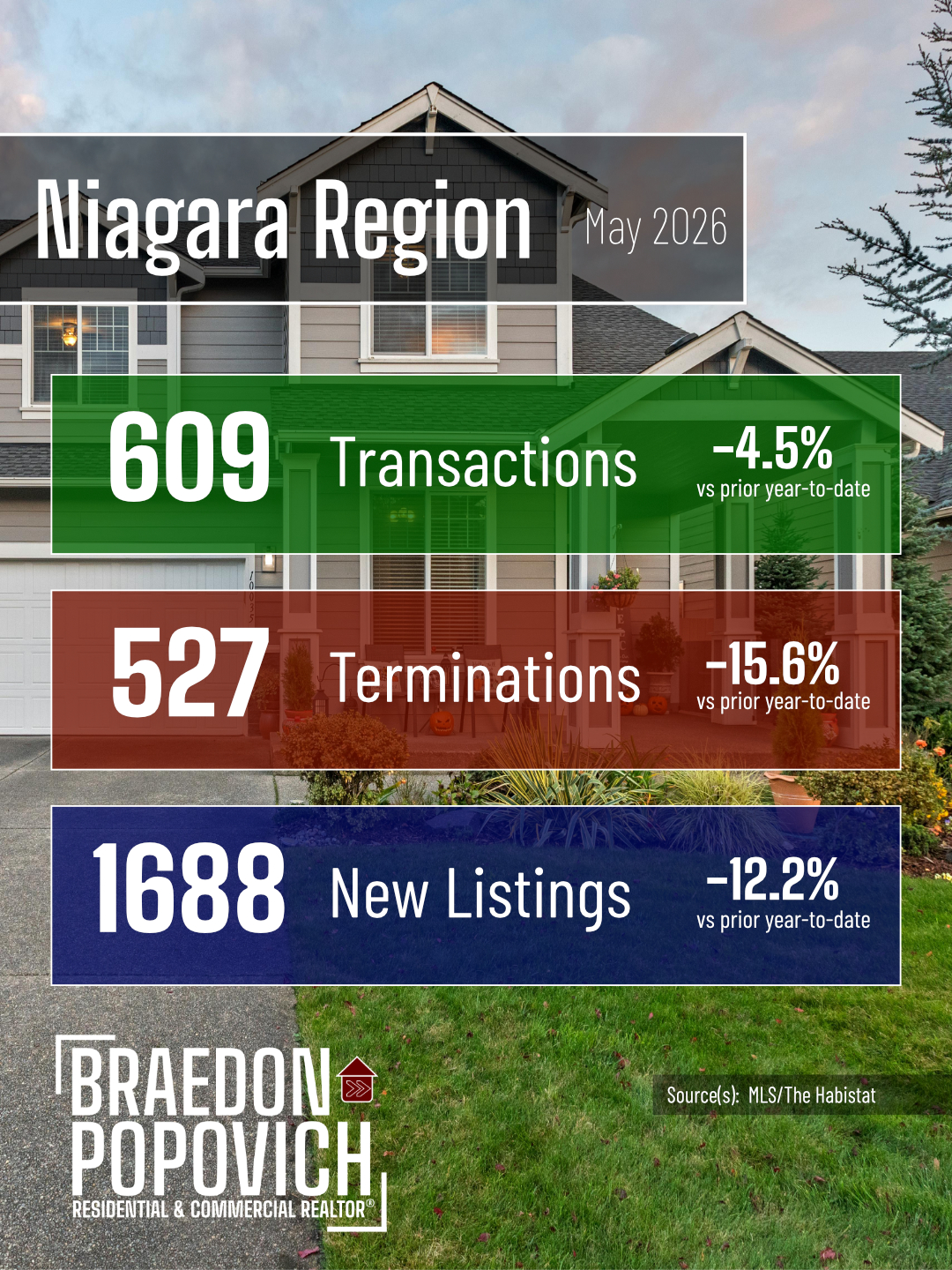
We definitely had a steep correction over the last couple of years, but things continue to appear as though they are levelling out. Prices are holding better than many people probably expected, activity remains soft, new listings are down, but terminations are also down. It’s a textbook example of the market cycle and market recovery. Buyers will have a year or two to take advantage of lower prices, while sellers are starting to adapt to the new pricing reality.
The really good news is that terminations continue to fall faster than transactions. 2025 saw the spike in terminations that exceeded transactions for a while, as sellers remained steadfast in their pre-correction pricing goals. So far, in 2026, we’ve had much-needed reality check on the seller’s pricing, along with growing interest (albeit slow) on the buyer’s side.
Why do transactions and terminations move in-sync?
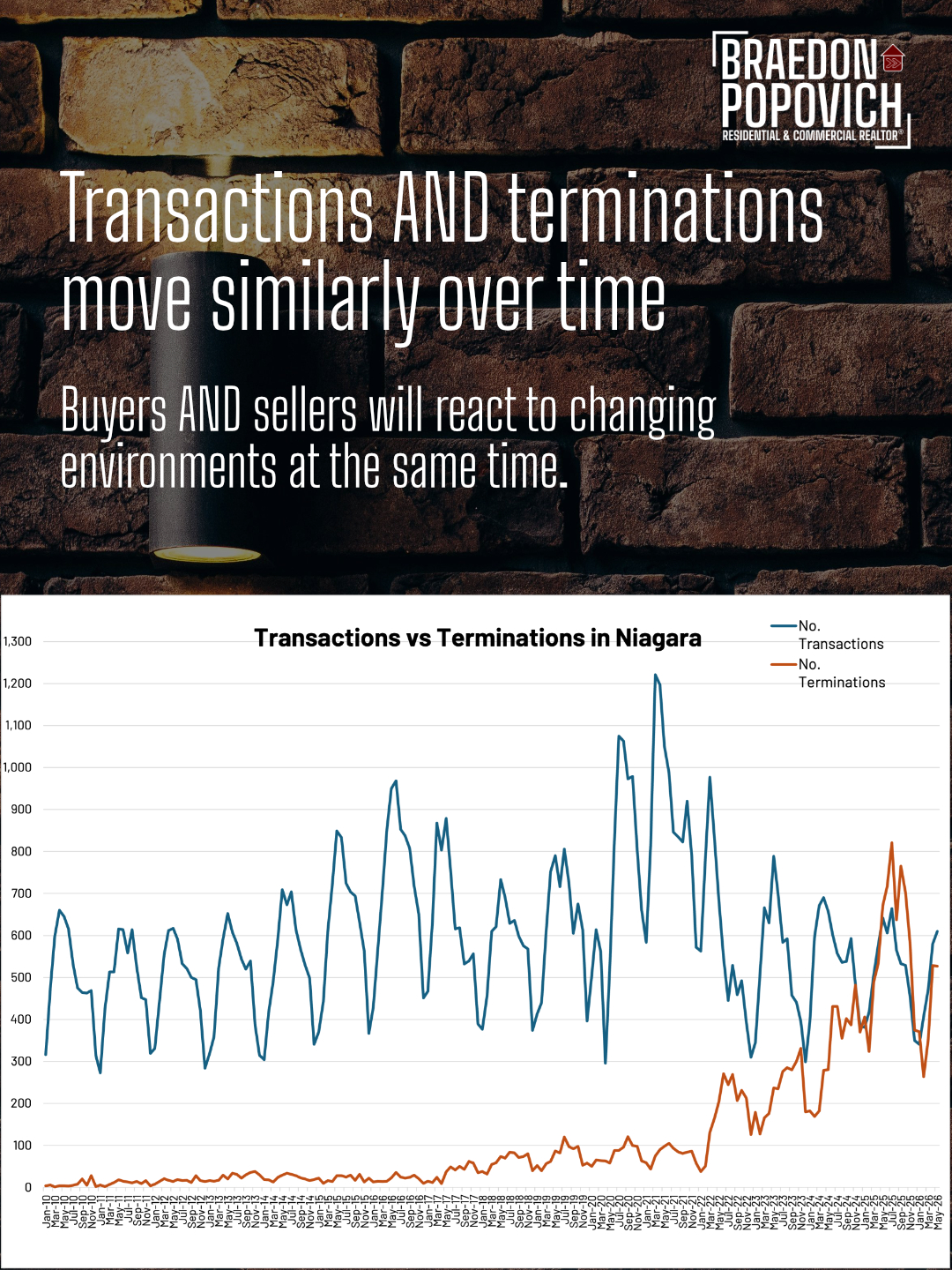
I’ll thank our late broker of record, mentor, and leader, Conrad Zurini, for really emphasizing this very interesting pattern a while back. The market’s activity as a sum of both terminations and transactions is absolutely what we should be talking about this week!
Niagara is definitely more volatile than Halton is, but the same concept applies. Basically, while amounts differ between transactions and terminations, the patterns they follow are similar.
It comes down to how both the buyers AND sellers will be reacting to changing market conditions at the same time.
For example, when the cycle shifts and prices start rising, sellers may try to get out of deals to get a higher price later on, while buyers do their best to ensure they close the deal before prices rise too far. And when the market shifts again a few years later, and prices start falling, sellers will try to close fast while buyers try to wait for better deals to come. Of course, this is a very simple and bare explanation.
Here’s the really important part though. They are both a sign of overall activity in the market, which can be a measure of people’s interests in buying or selling at that time. And this is where I point to the graph again, and indicate how the overall activity levels are lower right now compared to ten years ago. It’s a slow market, but not a dead one, nor a crashing one.
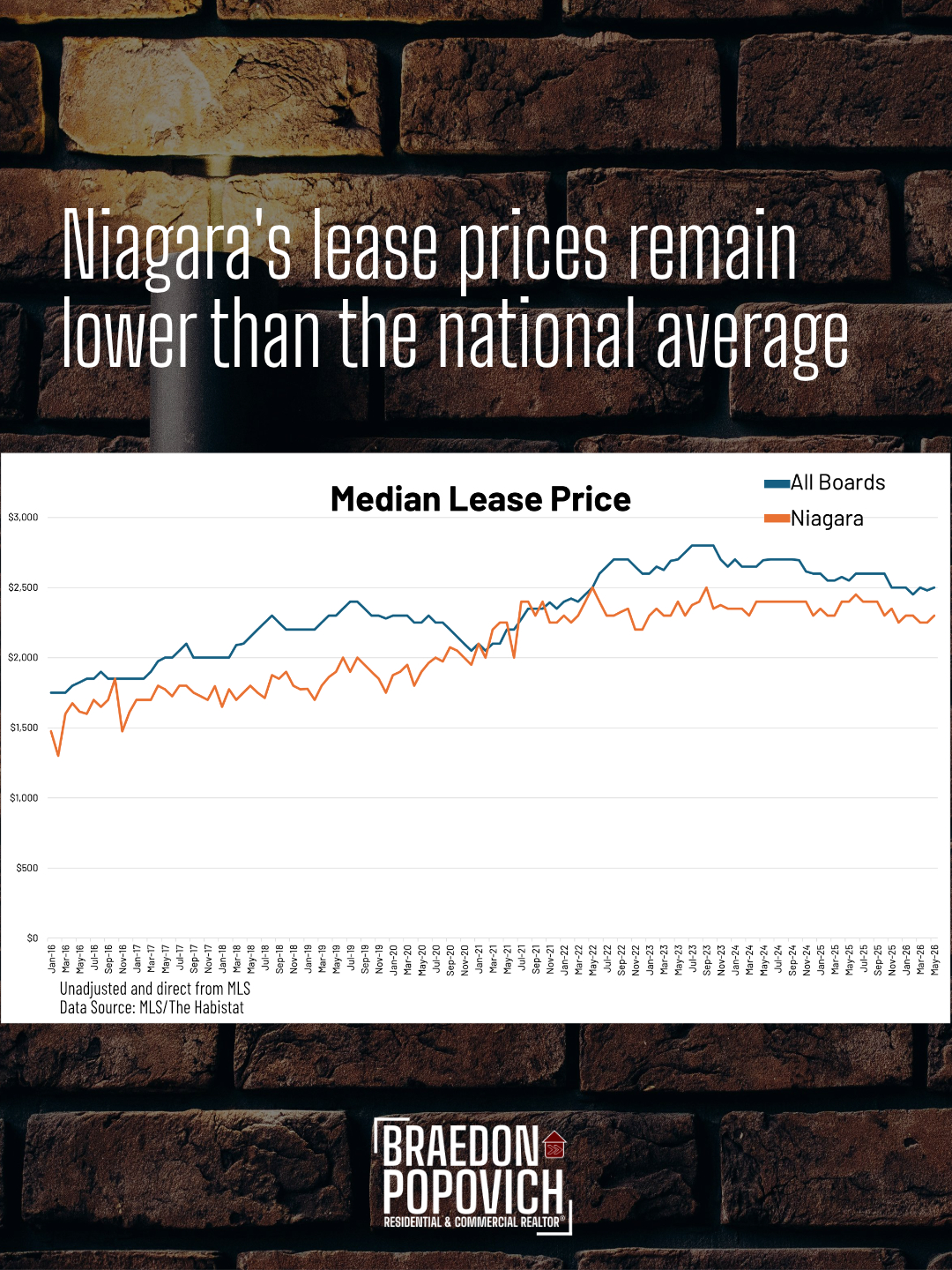
Niagara’s Rents are Lower than the National Average
Niagara continues to have more affordable rents than most other areas in Canada. A lot of this comes down to the number of rentals in the area, plus the number of detached homes being converted into student rentals. When you have both of Niagara College’s campuses, Brock University, and the University of Niagara Falls Canada around, you’re bound to attract a lot of rental activity. This increased supply is what’s keeping us lower.
However, for new builds that are being leased out, rents are much closer to the national average.
Infamous Toronto Slumlord Gets Jail!
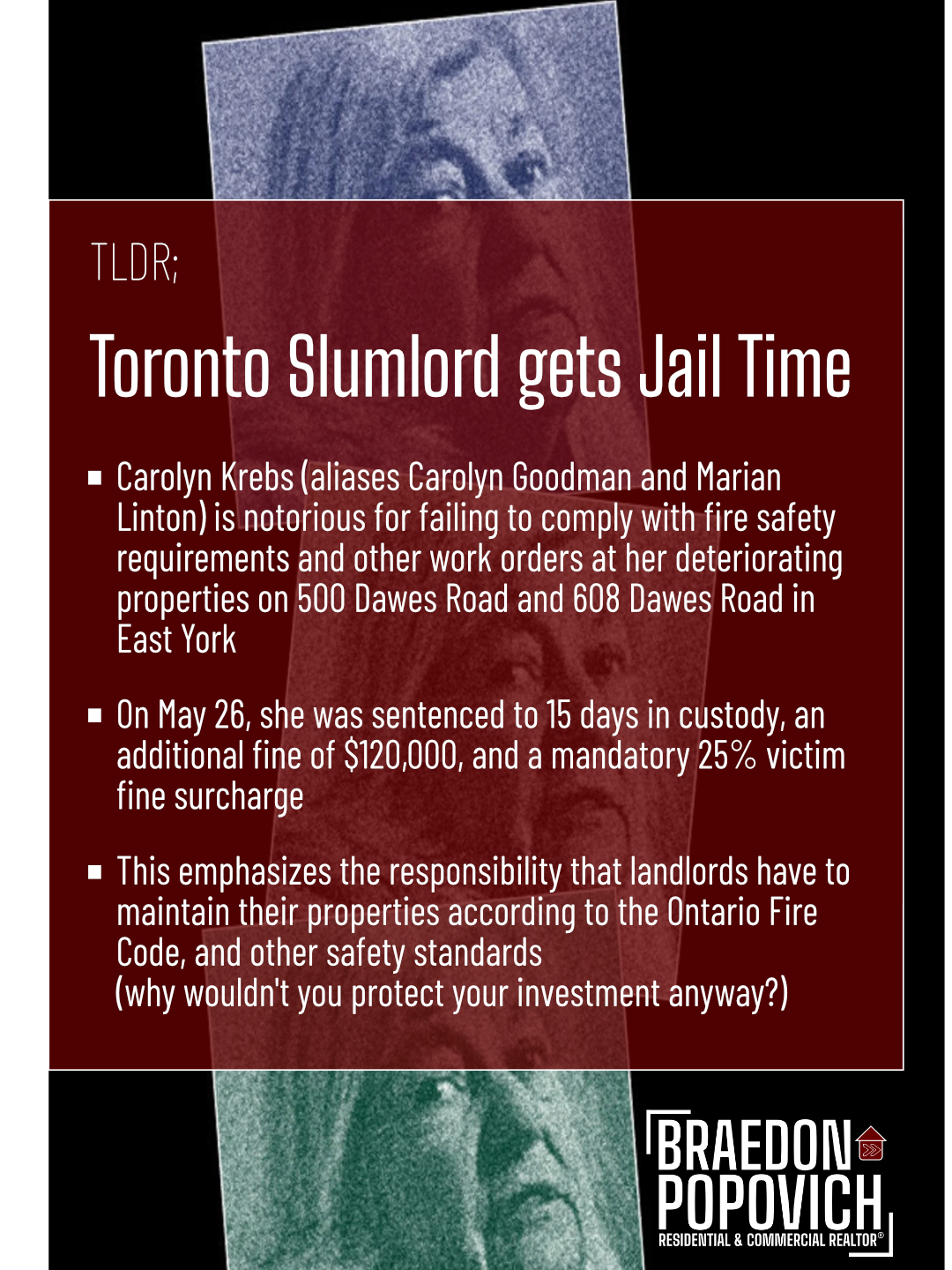
A little bit outside of Niagara, but a relevant lesson for all of us in the industry.
Carolyn Krebs, who also goes by aliases Carolyn Goodman and Marian Linton, is notorious in East York for her decaying properties on 500 Dawes Road and 608 Dawes Road. She uses aliases for a reason!
She’s refused to comply with fire safety requirements and other work orders. She’s bringing in thousands of dollars while refusing to put money toward maintenance or improvements.
Finally, the City of Toronto had enough. On May 26th, 2026, Krebs was sentenced to serve 15 days in custody, along with additional fines.
I’ll never understand the slumlord. I choose to avoid working with them because they’re incapable of rationality. Unlike the landlords I DO work with, slumlords don’t seem to understand how a property is an asset that can grow in value – but only if it doesn’t fall over first! Why would you not ensure that asset continues to grow in value by ensuring repairs and maintenance are done properly? Why not focus on renovations and improvements that boost its value even further than that?
Krebs is her own worst expense. The need for repair isn’t going anywhere. Eventually, those necessary repairs and improvements will add up and it’s clear that that’s already been the case. She’s choosing to spend money on a fight at the landlord and tenant board. To spend money on a fight against both the city and the province. And to spend money on a fight with her own tenants – who I would argue are customers in this business. And all of these fights and fines will inevitably add up and cost her more than if she just did the necessary repairs in the first place.
Renovations provide a return on the investment. Ignoring repairs just devalues the asset and reduces your overall net worth. Not to mention your reputation and ability to attract new customers.
But apparently slumlords didn’t go to business school to learn how marketing works.
Is the Stress Test More Stress than It’s Worth?
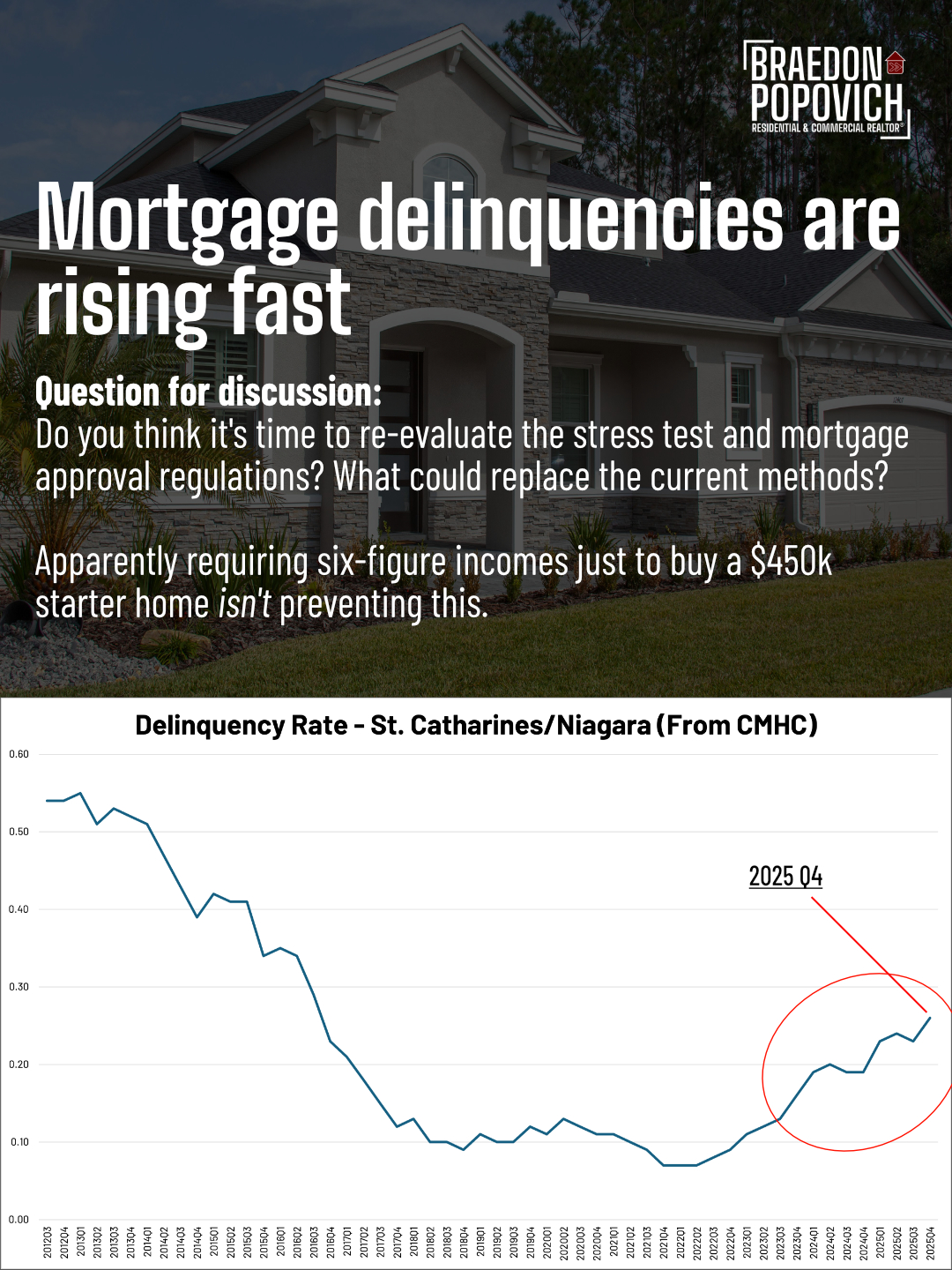
The reality is hitting us in the face: the current stress test requirements aren’t doing their job. Delinquencies are rising fast.
Yet, this same stress test requires a six figure income in order to buy a basic starter home, and regulators argue this is necessary to prevent financial collapse?
I call BS. And I’m working on a plan to get younger people to stand up loudly on this one and trying to find open minded people who want to create a realistic alternative to the current testing methods.
When the next generation inherits real estate, they are likely going to want to cash in (to cover groceries at this rate). The problem? If nobody can get approved for a mortgage, they’ll have no buyers.
And that’s a real issue to be concerned about for the mid-to-long term future of real estate and the economy as a whole. Luckily they’ll catch this early and do something…I hope.
Building equity you can retire on is a key part of planning for your financial future, and it’s long overdue for younger people to be given access to the market by qualifying at realistic incomes that reflect the modern reality.